Everybody Else's Life Looks Better on a Tuesday — And That's Kind of the Point

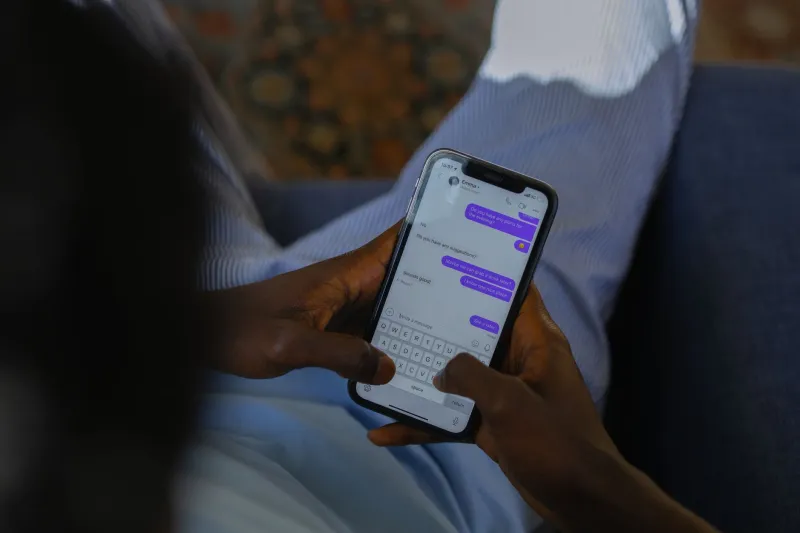
Somewhere between your second cup of coffee and that 10 a.m. meeting you could have been an email, it happens. You pick up your phone, do a quick scroll, and suddenly you're watching a coworker's Cabo recap, a college acquaintance's kitchen renovation reveal, and some influencer you followed three years ago announcing her second book deal. And you're sitting there in yesterday's hoodie wondering how your life got so... beige.
Welcome to the Tuesday comparison trap. It's real, it's specific, and it hits harder than most people are willing to admit.
Why Tuesday Is Ground Zero for Feeling Like You're Losing
Here's the setup. The weekend gave everyone content. Saturday hikes, Sunday brunches, family cookouts, spontaneous road trips — it all got photographed, filtered, and posted. Monday showed up with its whole "fresh start" narrative, and people leaned into it hard. New goals announced. Gym selfies taken. LinkedIn posts about pivots and progress.
By the time Tuesday arrives, you've absorbed all of it. The weekend wins. The Monday motivation. The curated version of about forty lives that aren't yours. And now you're fully in the workweek, the novelty of a new week has already worn off, and you're measuring your Tuesday against everyone else's greatest hits.
Psychologists call this social comparison theory — the idea that humans naturally evaluate themselves by looking at other people. It's not a flaw, exactly. It's wired in. But the problem is that our brains were never built to process the sheer volume of comparison data that a social media feed delivers before noon. We're doing something ancient with a very modern firehose, and it's doing a number on us.
The Feed Doesn't Show You the Full Picture — But You Already Know That
You've heard the "social media is a highlight reel" speech. Probably a hundred times. And yet knowing that doesn't actually stop the sting when you see someone your age just bought a house in Austin while you're still splitting rent three ways in a city that keeps getting more expensive.
Knowing something intellectually and feeling it emotionally are two completely different things. That's worth saying out loud more often.
The comparison trap doesn't care that you're smart enough to know better. It thrives on the gap between what you know and what you feel in the moment. And Tuesday, specifically, is when that gap is widest — because you're tired enough to be vulnerable but not yet checked out enough to stop caring.
There's also a sneaky thing that happens mid-week: your own momentum slows down just enough for doubt to fill the space. Monday you had a plan. Saturday you had fun. But Tuesday you? Tuesday you is starting to wonder if the plan was ever really good enough.
Upward Comparison vs. Downward Comparison — And Why We Almost Always Choose the Harder One
Research consistently shows that people engage in two types of social comparison. Upward comparison is when you look at someone doing better than you. Downward comparison is when you look at someone struggling more. Logically, downward comparison should make you feel better about your situation. But most of us default to upward, especially online, because that's where the content lives.
Nobody's posting their overdraft notices or their third rejection email of the week. They're posting the promotion, the engagement, the before-and-after. So your feed becomes a relentless stream of upward comparison opportunities, and by Tuesday you've consumed enough of them to genuinely start questioning your choices.
The wildest part? The people you're comparing yourself to are probably doing the exact same thing with someone else's feed. The comparison chain is endless, and nobody at any point in it actually feels like they've won.
What the Tuesday Spiral Actually Costs You
It's easy to dismiss comparison as just a bad mood. But it goes deeper than that. When you spend Tuesday measuring yourself against people whose full story you don't know, a few things happen that are worth paying attention to.
Your focus shifts. Instead of working on your actual goals, you're mentally auditing your life against someone else's. That's not a neutral activity — it's a drain. It takes up real cognitive and emotional bandwidth that you could be putting toward literally anything else.
Your gratitude shrinks. Things that were fine an hour ago suddenly feel inadequate. Your apartment. Your job. Your relationship. Your body. None of those things changed. But comparison reframes them as lesser-than, and that reframe can stick around long after you put the phone down.
Your motivation either spikes in an unhealthy way or tanks completely. Some people respond to comparison by overcorrecting — making impulsive decisions, signing up for things out of FOMO, or chasing someone else's version of success. Others just feel defeated and disengage entirely. Neither response actually gets you where you want to go.
How to Actually Break the Pattern (Not Just Mute It Temporarily)
Unfollowing people helps, but it's not the whole answer. The comparison trap isn't just a social media problem — it shows up in conversations, in offices, at family dinners. It's a habit of mind more than a feature of any particular platform.
The first move is noticing the trigger without judging yourself for having it. When you catch yourself feeling smaller because someone else's life looks bigger, just name it. Oh, there it is. That tiny bit of awareness creates distance between the feeling and the spiral.
The second move is getting honest about what the comparison is actually telling you. Sometimes it's pointing at something you genuinely want — a creative outlet, more financial stability, a stronger sense of community. That's useful information. Use it. But separate the signal from the noise, because a lot of what comparison surfaces is just ambient anxiety dressed up as ambition.
Third, and this one matters: stop keeping score with people who aren't even playing the same game as you. Your timeline is yours. Your circumstances are yours. The version of success that fits your actual life might not photograph as well as someone else's, but that doesn't make it less real.
Tuesday Deserves Better Than Being Your Weekly Pity Party
Here's the thing about Tuesday that nobody gives it enough credit for. It's actually a solid day to do the work. Not the performative Monday energy, not the coast-to-the-weekend Friday vibe — just real, quiet, mid-week progress. The kind that doesn't make a great Instagram post but actually moves the needle.
When you spend Tuesday measuring yourself against everyone else, you're wasting the part of the week that's most suited for actually building something. And the comparison trap loves that. It wants you distracted. It wants you auditing instead of acting.
So the next time Tuesday rolls around and your feed starts making your life feel like a participation trophy, try this: close the app, open something you've been meaning to work on, and spend twenty minutes just doing the thing. Not for the post. Not to catch up to anyone. Just because it's yours.
That's the real flex nobody talks about — showing up for your own life on a random Tuesday when nobody's watching.